
Damp basement: causes and fixes, from cheap to costly
Most damp basements start outside the house. Try the simple fixes before paying for expensive ones.
August 27, 2026 · 2 min read
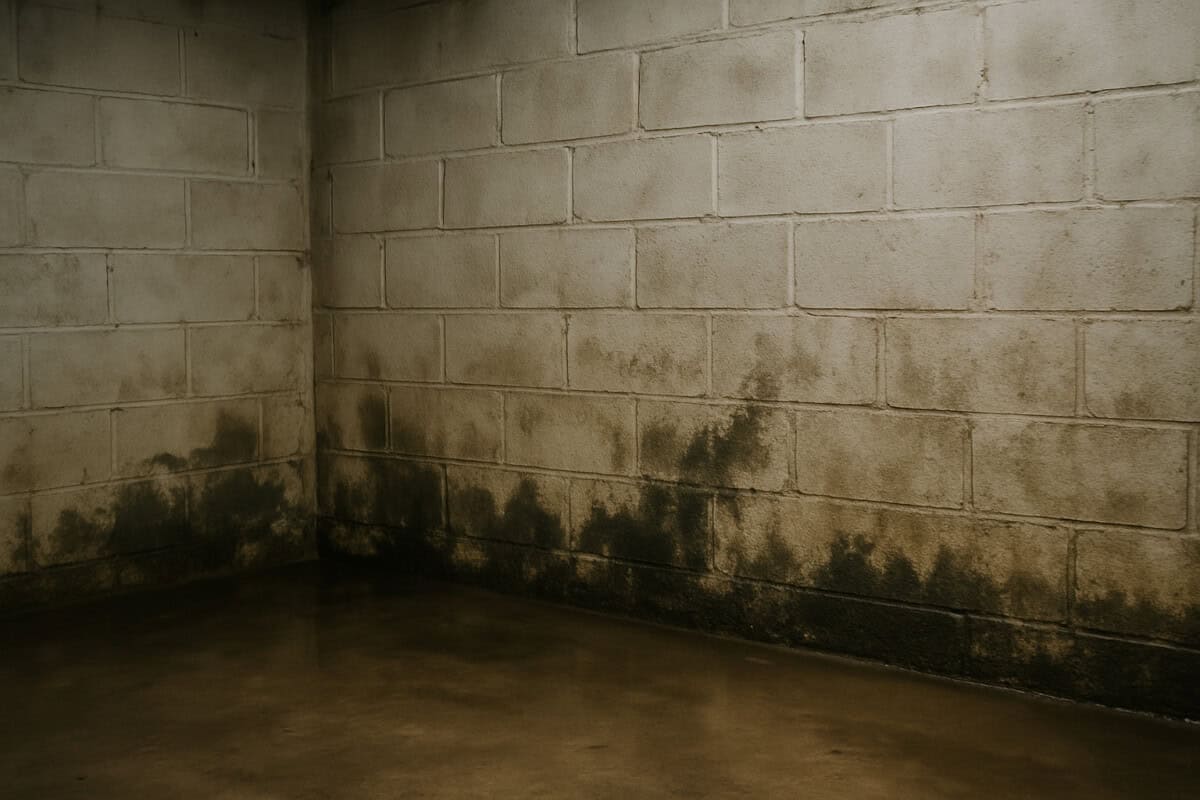
A damp basement is one of the most common home problems, and one of the most important to understand before buying. Water gets in from outside, from inside, or from the air itself, and the fix depends on which.
The short version: find where the moisture comes from first. Often the cheap fixes, such as grading, gutters and a dehumidifier, solve it; foundation cracks, drains and sump pumps are the next step.
Common causes
- Surface water: the ground slopes toward the house, or downspouts empty beside the foundation.
- Gutters: blocked or too short, so water pours down the wall.
- Groundwater: a high water table or heavy rain pushes water through cracks and joints.
- Foundation cracks or failed seals around pipes and windows.
- Plumbing leaks from supply or drain lines, or a leaking water heater.
- Condensation: warm humid air meeting cool walls, common in summer.
How to tell what you have
Taping a square of plastic to a wall for a day or two can help. If moisture forms on the room side, it is likely condensation; behind the plastic, it is likely coming through the wall. Look for white mineral deposits (efflorescence), stains, peeling paint, a musty smell and rust on the bottom of metal items.
Start with the cheap fixes
- Clean gutters, and extend downspouts well away from the foundation.
- Slope soil away from the house so water runs away from the wall.
- Seal visible small cracks.
- Run a dehumidifier and aim for roughly 30% to 50% humidity.
- Fix leaking pipes.
- Keep window wells clear.
Bigger fixes
If water keeps coming in, options include sealing cracks from inside or outside, installing interior drainage with a sump pump, or digging and waterproofing the outside wall. Exterior work is the most disruptive and expensive. Get more than one quote and ask what causes the problem, not just what the fix is.
Watch for mould
Dampness can lead to mould. Dry wet materials quickly, and see our guide on mould and radon in your home. Do not finish a basement over an unresolved moisture problem.
When you are buying
Look for stains, musty smells, new paint in one spot, a sump pump and efflorescence. Ask the seller about past water problems and insurance claims, and bring up basement water in your inspection.
Example
A basement smells musty each spring. The downspout dumps water by the foundation. Extending the downspout and regrading the soil may cost little compared with a new drainage system.
Costs vary widely, so get quotes before deciding.
General information only, not financial, legal or tax advice. Rules and rates change; confirm with a qualified professional.